Packing Services in {{area.main}}
{{business.name}} packs homes and businesses across {{area.alt}} — every room of it, or only the ones you'd rather not open a cupboard in. Cartons, paper, and specialist boxes arrive with the crew, everything is labeled to the room it's going to, and the same service will unpack it at the other end if you want it. Tell us which rooms you want handled and when you're moving.
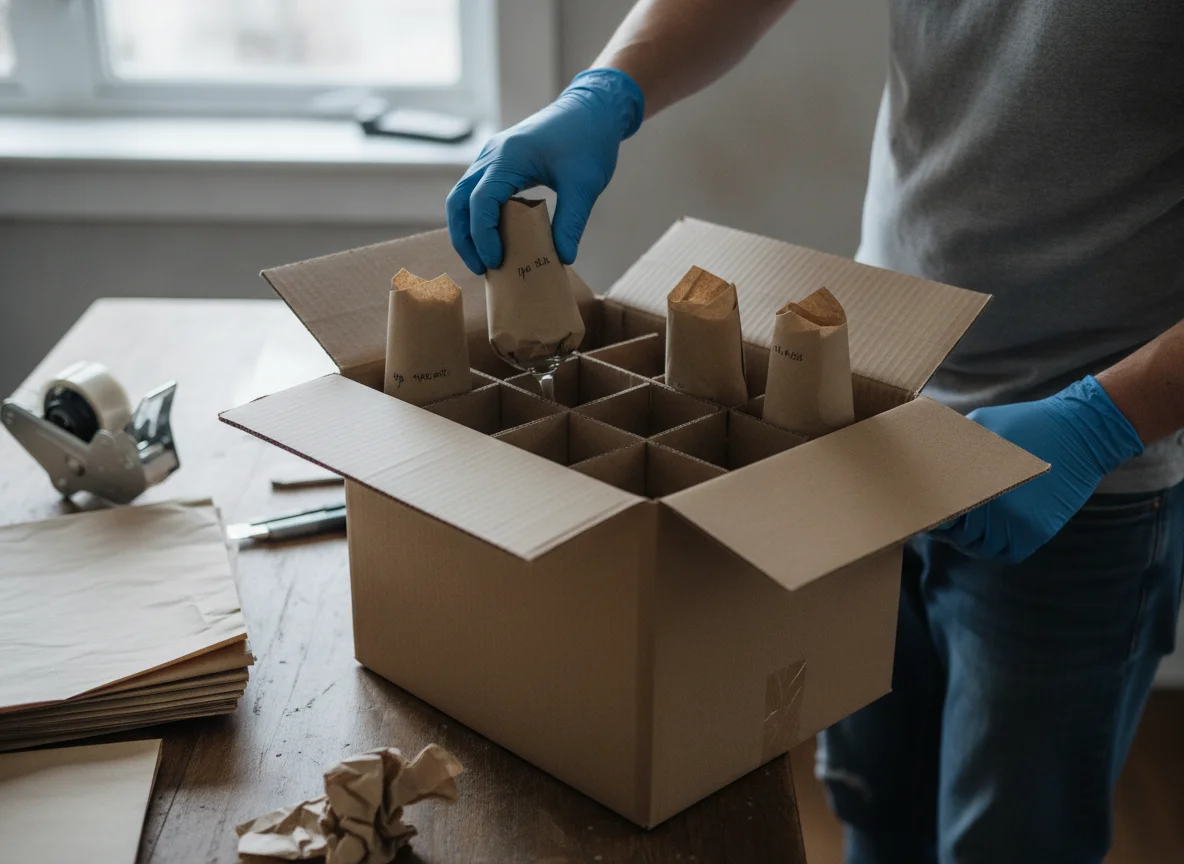
How much you hand over is up to you
This is the decision most people get wrong by treating it as all-or-nothing. There are four ways to use packing help, and mixing them is normal:
Full packing.
Every room, every cupboard, every drawer. You keep out what you need for the last night and the first morning, and everything else is handled.
Partial packing.
The rooms you don't want to do. Overwhelmingly this is the kitchen, and after that the garage, the china cabinet, and the home office. Everything else you do at your own pace.
Fragile only.
Glass, china, crystal, mirrors, framed art, TVs, instruments, and collections get packed properly while you handle the clothes, the books, and the linen — which are the easy parts anyway.
Unpacking.
The half almost nobody books and almost everybody wishes they had. More on that below.
If you'd rather do all of it yourself, materials alone are worth asking about — the right carton for the job is most of the battle, and it's the thing people improvise with worst.
Packing day is not moving day
Worth knowing before you plan your week: a full pack happens before the move, usually the day before, and for a large house across two or three days. The truck arrives to a house that's already boxed. How the move day itself runs is covered on the local moving and residential moving pages.
That changes what your last days look like. Beds, the coffee maker, the shower, and the pets' things get packed last or on the morning itself. Anything you're still using stays out and gets a box of its own at the end. And the sorting has to happen before the packers arrive, not during — a crew will pack whatever is in front of them, including the drawer of dead batteries and the wardrobe of clothes you've already decided not to keep.
What good packing actually looks like
Most packing damage isn't bad luck, it's method. This is what's different about a carton packed properly:
Plates travel on edge, like records in a rack
Never stacked flat. A stack of plates carries the whole weight of the pile through the middle of the bottom one, and that's where it cracks.
Unprinted paper, not newspaper.
Newsprint ink transfers onto china, glass, and anything painted, and you'll be washing it off for weeks.
Every box is filled to the top, and every void is filled.
A carton with a gap in it collapses when something is stacked on it; a carton packed tight carries weight. Tilt a finished box and nothing inside should move.
Heavy things in small boxes, light things in big ones.
A large carton filled with books is a carton that fails at the bottom seam, usually while someone is carrying it down stairs.
Bottom seams taped across the join and up both sides
Not a single strip of tape and hope.
Stemware upright in cell dividers
One glass per cell, so nothing touches anything else.
Lamp shades on their own
Nested, never packed with the base or with anything that can press on them. A crushed shade is the most common piece of avoidable damage in a house move.
Mirrors, framed art, and glass tops in telescoping cartons
Carried and loaded on edge.
Every carton marked with the room it's going to, which way is up, and roughly what's in it
And nothing sealed that hasn't been noted down.
What we won't pack
Anything flammable, pressurized, or corrosive.
Fuel and propane, solvents and thinners, aerosol cans, pool and garden chemicals, ammunition, fireworks. None of it belongs in a carton or on a truck, so it needs using up, disposing of, or carrying yourself before the day.
Perishables and open food
Which is why the fridge and the pantry get sorted rather than boxed.
Documents, medication, jewelry, keys, laptops, hard drives, and anything irreplaceable
These travel with you, and a packing crew is instructed to leave them alone rather than make a judgment call.
Plants and pets
Neither travels safely in a carton, and both need an arrangement of their own — usually your own car, or someone who moves them for a living.
Anything you'd rather nobody else handled.
Say so, put it in one room, and that room stays shut.
Unpacking, which is the half people skip
Booking the pack and skipping the unpack is the most common false economy in moving. The packing gets done under pressure of a deadline; the unpacking gets done over six months, around a job, with cartons in the hallway the whole time.
An unpack takes cartons apart room by room, puts contents onto flat surfaces or straight into the cabinets where you want them, and — the part that actually matters — takes the packing material away. The mountain of flattened cardboard and used paper a house move generates is genuinely difficult to get rid of, and having it leave with the crew is worth more than most people expect.
You can scale it the same way as the packing: the whole house, or just enough to make the kitchen and the bedrooms work on night one.
Sort before you pack
You are about to have someone wrap, box, carry, and unwrap every single object you own, including the ones you were going to get rid of anyway. Deciding what isn't coming is the highest-return afternoon of the whole move, and on a long-distance move, where weight is the thing that counts, it's worth more still. It only works done beforehand — once something is boxed and taped, nobody is opening it again to reconsider.
What affects the price
How many rooms, how much of it is fragile, how much specialist material the job needs — dish packs, wardrobe boxes, mirror cartons, custom crates for art or stone — whether unpacking is included, and how much sorting is still outstanding when the crew arrives.
There's also a factor that isn't about cost at all. Who sealed a box affects where responsibility sits if something inside it arrives broken, and the difference is bigger than most people realize. Ask how that's handled before you divide the rooms up — for the china, the art, and anything genuinely valuable, it may decide which side of the line they belong on.
We cover {{area.full}}.
Common questions
Do you bring the boxes and materials?
Yes — cartons, unprinted paper, tape, and the specialist boxes the job needs turn up with the crew. It's worth confirming what's included when you book, since that varies between providers and it's easier to ask than to assume.
Can I pack some rooms and have you do the rest?
That's the most common arrangement of all. Tell us which rooms are yours and which are ours, and label yours clearly so nothing gets packed twice or missed entirely.
Do I need to be there while you pack?
Someone should be, at least at the start and the end. There are always decisions — what's staying, what's going in the car with you, which cupboard is off limits — and they're quick to answer in person and slow to sort out afterward.
What happens to all the cardboard afterward?
If unpacking is part of what you've booked, it goes with the crew. If you're unpacking yourself, plan for it — a house's worth of flattened cartons is more than a normal collection will take, and it's easier to arrange in advance than to stare at.
Ready to hand over the boxes?
Tell us which rooms you want packed, how many bedrooms are in the house, your moving date, and whether you want unpacking at the other end. If you're moving a business rather than a home, commercial moving covers how that's usually split between your staff and the crew.